JSP Meaning: What Does JSP Mean in Slang?
Have you seen JSP in a text, comment, or social media post and wondered what it means? The JSP Meaning can vary depending on the context and the way someone uses the abbreviation. Like many internet slang terms, JSP may have a different meaning in casual conversations, messages, and online communities.
In this Guide you learn what JSP means in slang, how people use it in texting and social media, and the different situations where you may come across this abbreviation. We’ll also cover simple examples to make the JSP Mean’s easier to understand.
What Does JSP Meaning?
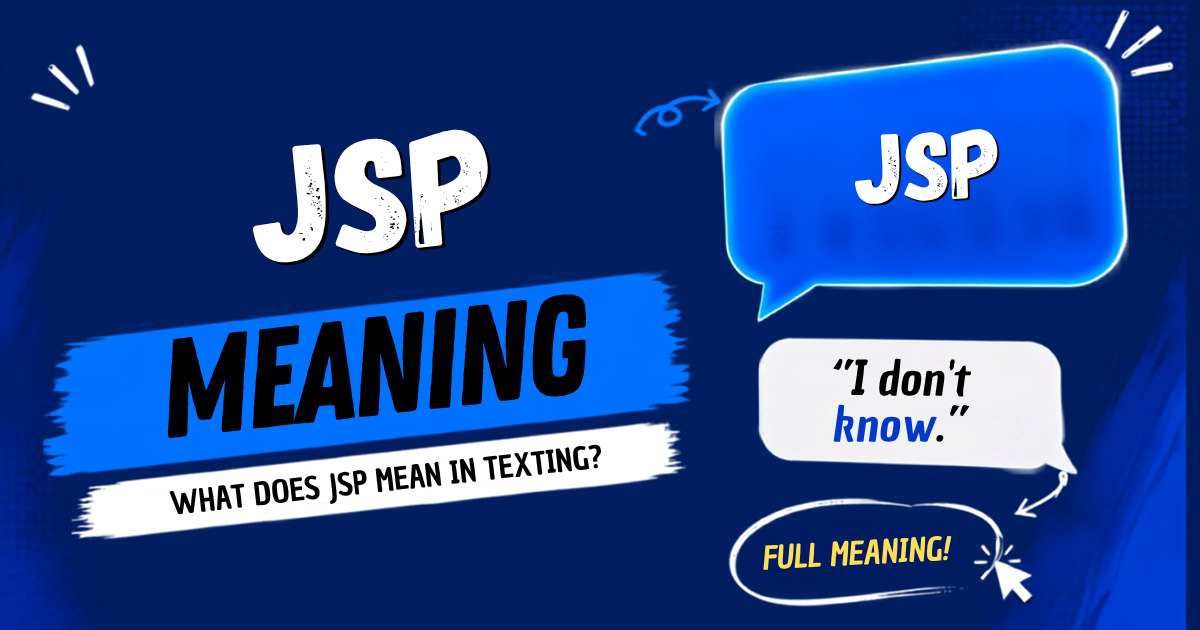
JSP Meaning in texting, derived from the French phrase “je sais pas,” translates to “I don’t know.” This slang abbreviation has gained traction in casual online conversations, much like the English shorthand IDK. The beauty of JSP lies in its brevity, making it an efficient way to express uncertainty or a lack of knowledge without over-explaining.
The tone of JSP is often neutral but can carry a slightly dismissive undertone, especially when used in response to questions that might require deeper thought. This casual phrasing reflects how language evolves for convenience; dropping the “ne” in “je ne sais pas” is a common practice in everyday French simplifying communication.
This linguistic trend highlights how in the realm of texting brevity rules as much as context, allowing users to convey sentiments quickly and effectively.
Origin and History of JSP
JSP comes from the French phrase “je sais pas,” a casual form of “je ne sais pas,” meaning “I don’t know.” The abbreviation became useful in texting because shorter forms make quick conversations easier.
As texting and social media became more popular, JSP appeared in online conversations beyond French-speaking communities. Today, you may see it on platforms such as TikTok, Instagram, and other social spaces, especially among users familiar with French slang.
How “JSP” Is Used on Different Platforms
TikTok
On TikTok, JSP can appear in comments on international content, especially when users are unsure about a song, video, or trend. For example: “What’s this song called? JSP.”
On Instagram, friends may use JSP in DMs when they do not know the answer or are unsure about plans. Example: “Are we meeting tonight? JSP yet.”
Twitter/X
On Twitter/X, the abbreviation can be used in short posts to express confusion or uncertainty. Example: “I have a test tomorrow and JSP anything.”
Gaming
In gaming chats like Discord, players may type JSP when they are unsure about an opponent’s location or what is happening. Example: “Where did he go? JSP.”
| Platform | Common Use | Tone | Example |
| TikTok | Asking for context | Curious | “What is this trend? jsp” |
| Replying to questions | Casual | “jsp maybe later” | |
| Twitter/X | Complaining about life | Dramatic | “my whole schedule is a mess jsp” |
| Discord | Game updates | Urgent | “jsp where the sniper is” |
JSP in Texting vs Real Life
JSP is mainly used in texting, social media, and online conversations rather than in spoken communication. People usually type JSP when they want to quickly express “I don’t know” without writing the full phrase. It is especially common in casual messages and online discussions.
Most people would not pronounce the letters “JSP” in real-life conversations. French speakers are more likely to say the full phrase “je sais pas,” which means “I don’t know.” The abbreviation is mainly useful in written communication where shorter expressions make messages faster and more casual.
Examples of “JSP” in Sentences
JSP can be used in different types of casual conversations when someone is unsure, confused, or simply does not know the answer.
Friendly/Casual
- Are you coming tonight? JSP, I haven’t decided.
- Do you know where he went? JSP.
Romantic/Flirty
- Do you think she likes me? JSP, maybe.
- What should we do tonight? JSP, you choose.
Funny/Sarcastic
- Why am I still awake? JSP, bad decisions.
- Where did all my money go? JSP, probably food.
Social Media/Online
- What is happening here? JSP
- Why did I agree to this? JSP.
Variations and Related Slang
JSP is one of several abbreviations people use to express uncertainty or share quick reactions online. Some terms may look similar but have completely different meanings. These abbreviations are mainly used in texting, social media, and online chats where people prefer short and convenient expressions.
The meaning of JSP can also change depending on the language and context. In French texting, JSP commonly comes from “je sais pas,” meaning “I don’t know.” Other internet abbreviations may express honesty, uncertainty, or personal opinions, but they should not be confused with JSP. Understanding the context helps determine what the abbreviation means in a conversation.
Here’s how JSP compares with a few common texting abbreviations:
| Term | Meaning | Similar/Different? |
| JSP | Je sais pas (I don’t know) | — |
| IDK | I don’t know | The exact English equivalent. |
| JSYK | Just so you know | Looks similar but means the opposite. |
| IKR | I know, right? | Used when you strongly agree with someone. |
Is “JSP” Safe for Kids?
JSP is Generally safe for kids because it is simply a French abbreviation for “I don’t know.” It does not have a hidden, explicit, or inappropriate meaning. Children may see JSP in text messages, social media comments, gaming chats, or conversations with French-speaking friends and online users.
The abbreviation is mainly used as a quick way to express uncertainty or say that someone does not know the answer. Its meaning is usually harmless and straightforward. As with any internet slang, it is still a good idea to consider the surrounding conversation, because context can sometimes change how a phrase is understood.
When to Use (and Avoid) “JSP”
JSP works best in casual conversations where the other person understands the abbreviation. It is useful when you want to quickly say that you do not know something.
When to Use JSP
- When chatting with French-speaking friends.
- In casual texts or social media conversations.
- When talking with international online friends.
- When you genuinely do not know the answer.
When to Avoid JSP
- In formal emails or professional messages.
- When speaking with someone unfamiliar with internet slang.
- When clear and formal language is expected.
- When you actually know the answer.
JSP Mean’s vs Fein Meaning
JSP Meaning stands for “Je sais pas” which means “I don’t know” in French. It is mainly used in texting and online conversations when someone does not know the answer or is unsure about something.
Fein Meaning refers to a strong craving or intense desire for something. Unlike JSP, it is used to describe wanting or being highly interested in something rather than expressing uncertainty.
Conclusion
JSP Meaning is a simple French texting abbreviation that means “I don’t know.” It is commonly used in casual messages, social media, and online conversations when someone is unsure or does not have an answer.
As internet communication becomes more global, slang like JSP can easily cross language and cultural boundaries. If you understand the context, it is an easy and informal way to express uncertainty in a conversation.
FAQs
What Does JSP Stand For?
Yes. JSP and IDK have essentially the same meaning, but JSP comes from French while IDK is an English abbreviation.
What Does JSP Mean in French?
In French, “je sais pas” means “I don’t know.” JSP is simply a shortened texting form of this phrase.
Is JSP Slang?
Yes. JSP is informal French texting slang commonly used in chats, social media, and online conversations.
Is JSP Safe For Kids?
Yes, JSP is generally harmless. It simply means “I don’t know” and does not have an explicit meaning.